Induction hob: who it suits, and who it doesn't
An induction hob is the right choice for almost anyone replacing an electric ceramic hob or switching away from gas. It heats the pan directly through a magnetic field, so it is dramatically faster than ceramic, far more precise to control, and noticeably cheaper to run because so little heat is wasted into the kitchen. The glass only ever warms from the pan resting on it, which makes induction the safest hob type to have around children. For day-to-day cooking, the experience is closer to gas than ceramic ever managed: heat appears the instant you turn it up and vanishes the instant you turn it down.
It is only fair to be honest about who it does not suit, too. Induction only works with magnetic cookware, so if your kitchen is full of aluminium or copper pans you will need new ones or an adapter plate, which is a real cost to factor in. A built-in hob also needs a dedicated electrical circuit fitted by an electrician, which rules it out for some rented homes. And if you are deeply attached to a visible flame for charring or wok work, induction will feel different. For the great majority of UK kitchens, though, the speed, control, efficiency and safety make induction the obvious upgrade, and our six picks cover the realistic range of budgets and situations.
The first decision: size, zones and your electrics
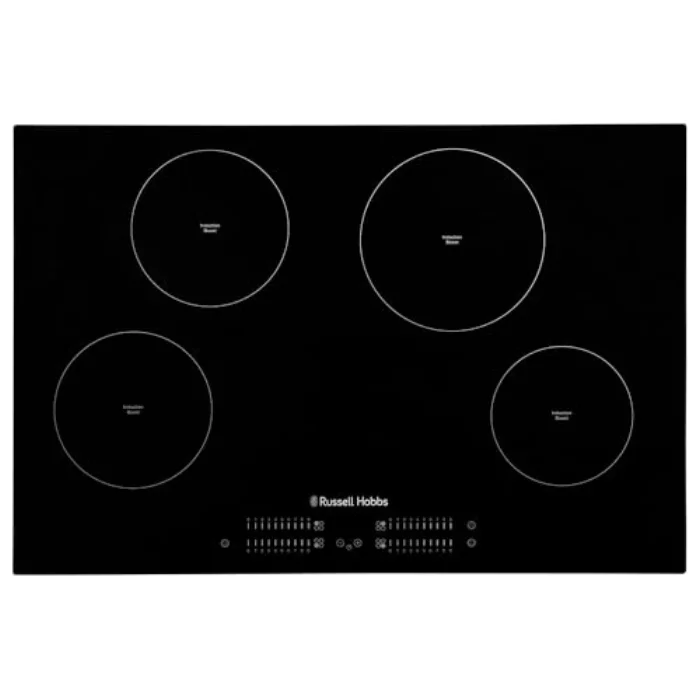
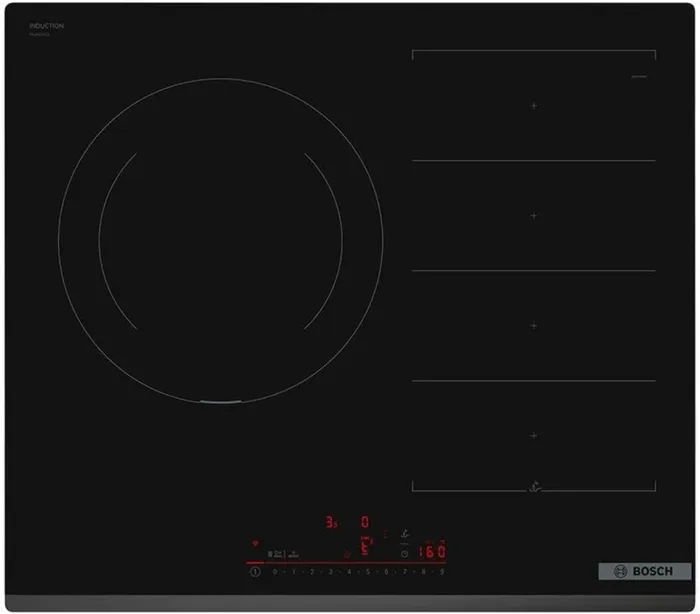
The single most important choice is not the brand but the format, matched to your kitchen and your wiring. Most homes want a standard 60 cm four-zone hob, which fits the common worktop cut-out and runs a couple of pans plus a sauce and a kettle-pan with ease. That is the format of five of our six picks, including our best overall Bosch Series 6. Larger 70 cm to 90 cm hobs add zones or flexible cooking areas for keen cooks, while a two-zone portable hob suits a tiny kitchen or extra capacity at Christmas.
Just as important is the electrical supply. Almost every built-in induction hob draws more power than a standard 13A socket can deliver, so it must be wired into a dedicated circuit by a qualified electrician. Budget for that fitting cost, and confirm you can have the circuit installed before you buy, especially if you rent. The one exception in our list is the plug-in Russell Hobbs twin-zone hob, which runs from an ordinary socket because its total power is lower. If a new circuit simply is not possible, that plug-in model is your route to real induction cooking. Our guide to the best 60 cm hobs covers the standard size in more detail.
The thing everyone gets wrong: pans
Here is the question we are asked most: will my pans work on induction? An induction hob heats only ferromagnetic cookware, so the answer is not the same for every pan. Cast iron, enamelled steel and most quality stainless steel work; pure aluminium, copper, glass and many older non-magnetic stainless pans do not. The test takes two seconds: hold an ordinary fridge magnet to the base of the pan. If it grips firmly, the pan will work; if it slides off, it will not.
This catches people out, so check before you order the hob, not after. If a favourite pan fails the test, you have two cheap options: buy a few induction-ready pans, which need not be expensive, or use an induction adapter plate that sits between the hob and a non-magnetic pan. Either way, switching to induction rarely means replacing every pan you own. We walk through compatibility, the magnet test and the adapter workaround in our guide to pans for an induction hob, so you can buy with confidence.
Induction vs ceramic: why induction usually wins
People often confuse induction and ceramic hobs because both have a flat glass surface, but they could hardly be more different underneath. A ceramic hob uses an electric element that glows red and warms the pan slowly by conduction, so the glass itself gets dangerously hot and the response is sluggish. An induction hob creates a magnetic field that heats the pan directly: the glass stays cool except where the pan touches it, water boils far faster, and changing the heat is instant. Induction is also the more efficient of the two, transferring around 85 to 90 per cent of its energy into the pan against roughly 70 per cent for ceramic, which is why it tends to be cheaper to run despite costing more to buy.
Ceramic still has its place. It is cheaper up front and it works with any pan, including the aluminium and copper that induction rejects, so it can suit a tight budget or a kitchen full of incompatible cookware. But for speed, control, efficiency and safety, induction is the better long-term choice for most people. We set the two side by side in detail in our guide to induction vs ceramic hobs, so you can weigh the cost against the benefits for your own kitchen.
How we chose these six
We deliberately picked hobs that cover the full range of real UK needs rather than six near-identical 60 cm boxes. There is a do-everything best overall, a feature-rich premium hob with a bridge zone, a value all-rounder, a genuine budget option, a speed specialist with boost on every zone, and a plug-in hob for anyone who cannot fit a built-in one. Every model here is from a brand that is properly available and supported in the UK, and each one earns its spot for a specific buyer rather than padding the list. Work out your format and your wiring first, and you will find your hob on this list. Our full buying guide covers everything else: zones, controls, the features worth paying for, and the ones you can safely skip.