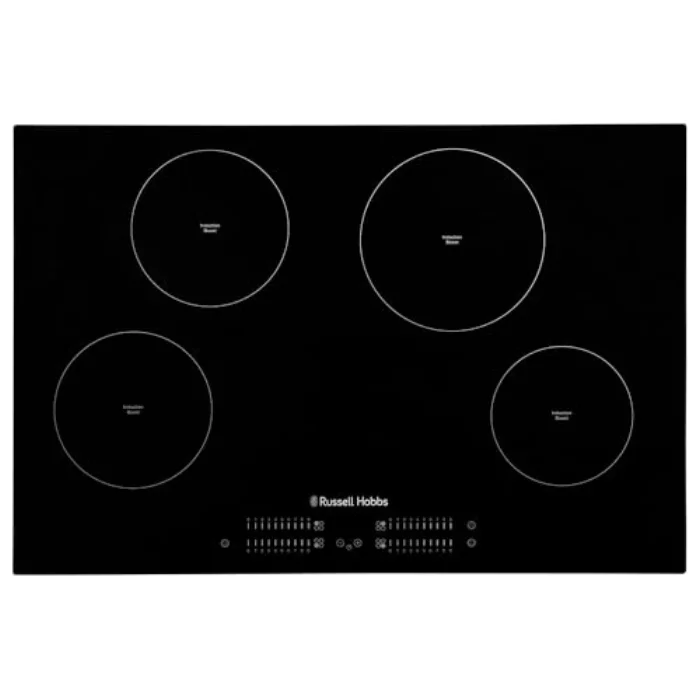
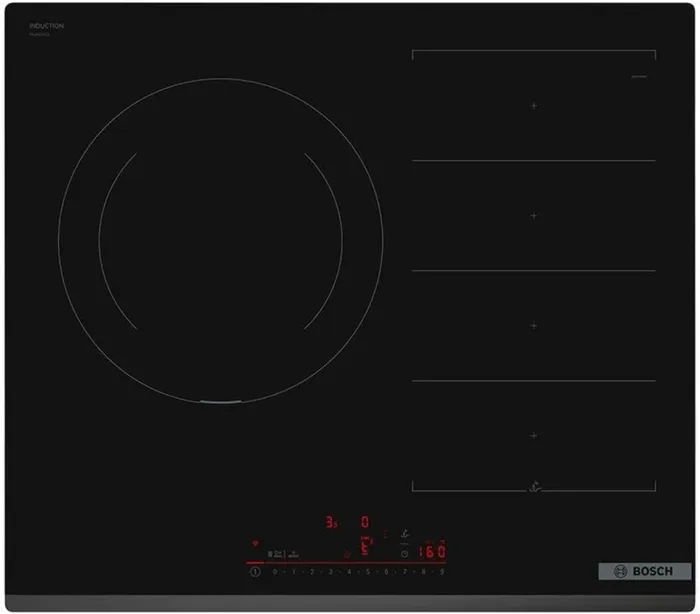
Size and zones: matching the hob to your kitchen
The first decision is the format, and for most kitchens that means a standard 60 cm hob with four cooking zones. It fits the common worktop cut-out, and four zones comfortably run a couple of pans plus a sauce and a kettle-pan, which covers how the great majority of households actually cook. Five of our six picks are this size, including our best overall Bosch Series 6, simply because it's the right answer so often.
There are alternatives for specific needs. Larger 70 cm to 90 cm hobs add zones or a flexible cooking area for keen cooks who often use big or odd-shaped pans, while a two-zone domino or a portable hob suits a very small kitchen, a second worktop or extra capacity at Christmas. If you're replacing an old 60 cm hob, an induction hob of the same nominal size will usually drop into the existing aperture, but always check the exact cut-out dimensions in the manual, as they vary by a few millimetres between models. Our guide to the best 60 cm hobs goes deeper on the standard size.
Wiring and installation: the step people forget
This is the part that catches buyers out, so plan it before you order. Almost every built-in induction hob draws more power than a standard 13A socket can supply, so it must be wired into a dedicated electrical circuit by a qualified electrician. That's a real cost to budget for on top of the hob, and a job to arrange, especially if you rent and need a landlord's permission. Don't assume your existing hob's supply is adequate; an old ceramic or gas hob may not have the circuit a powerful induction hob needs.
If a dedicated circuit isn't possible, you aren't shut out of induction. The plug-in Russell Hobbs RHDIH103 twin-zone hob runs from an ordinary socket because its total power is lower, which makes it the practical route for renters, caravans and anyone who can't have wiring altered. It can't match a built-in hob for power or zones, but it's genuine induction with zero installation, which for the right buyer is exactly the trade worth making.
Controls, power levels and boost
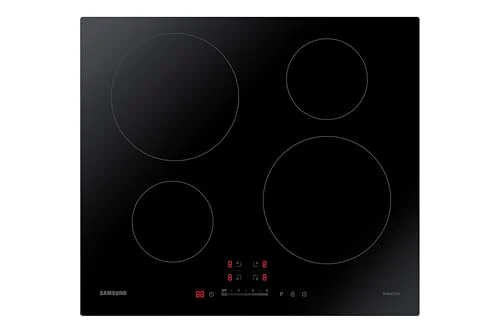
Once size and wiring are settled, the controls are what you'll live with daily. The best, like the slider on the Bosch Series 6, let you tap or glide straight to the power level you want rather than stepping up one notch at a time, which makes precise cooking far easier. More power levels (15 on the Samsung NZ64H versus 9 on a budget hob) give finer gradations between settings, useful for holding a delicate simmer. Cheaper touch controls work perfectly well but feel a fraction less crisp, so you occasionally tap twice.
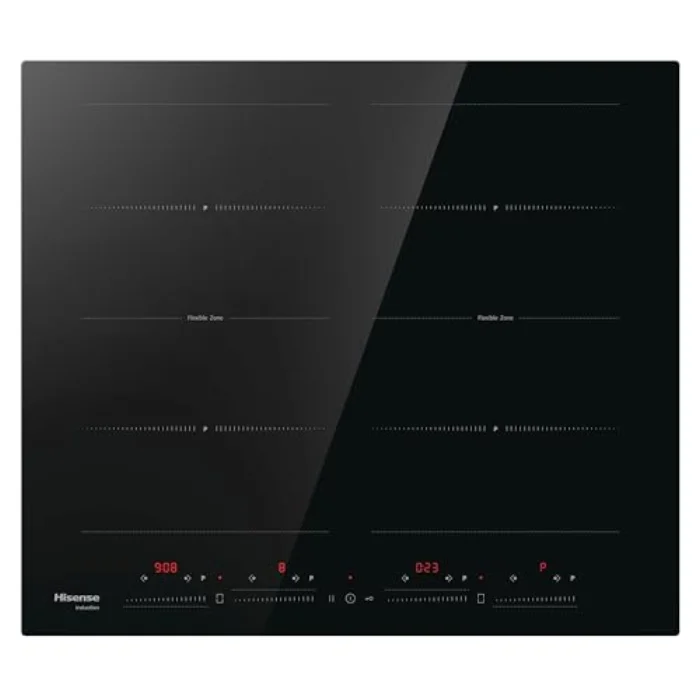
Boost is the other feature worth understanding. It temporarily channels extra power into a zone for very fast boiling. The question is how many zones have it: some hobs offer boost on one or two rings, while the Hisense I6433C has it on all four, so you can push several pans at once. If you regularly cook full meals against the clock, boost on every zone is a genuine advantage; if you mostly cook one or two pans, boost on the larger zones is plenty.
Features worth paying for, and ones you can skip
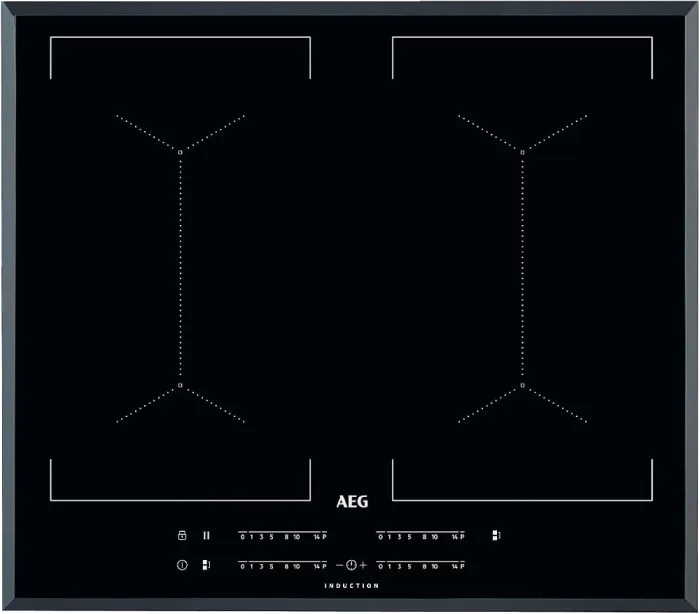
A few features genuinely matter. A child lock and residual-heat indicators are essentials for any family kitchen, and every hob in our comparison has them. A pause function, as on the Samsung, drops every zone to a low setting at one press, which is more useful day to day than it sounds. A bridge zone, as on the AEG IKB64431XB, links two rings into one long heating area, which is worth paying for if you use a griddle plate or a fish kettle, and irrelevant if you only use round pans.
Other features are nice-to-have rather than deciding factors. Smart and connected features like Hob2Hood only help if you have the matching extractor, so don't pay for them on spec. A premium finish, the bevelled edge and fingerprint-resistant glass, looks lovely but doesn't cook your food any better. And don't be swayed by inflated zone counts you won't use; for most households, four well-judged zones beat five mediocre ones. Decide which extras you'll actually use, and don't pay for features that will sit idle.